
Consensual
Non-Monogamy
Level 1:
Clinical Skills
and Interventions
Join now!
Over 10 million Americans are in non-monogamous relationships.1
Are you ready to work with them?
Level up your skills and prepare for a growing wave of clients.
What do you do when…
- Your client is trying to transition from infidelity to polyamory?
- Your client wants to embrace polyamory—but their jealousy is going haywire?
- New relationship energy has one of your clients acting like a lovesick teen?
- Your client wants to open up, but their partner isn’t so sure…or vice versa?
- You want to help, but you don’t have training, and you’re not really sure it can work?
I’ve got your back with practical, no-nonsense guidance for these common challenges.
This is so much more than a 101 course.
You'll discover:
- How consensual non-monogamy (CNM) overlaps with LGBTQ+ populations and kinky populations, and what that means for your work
- How to work with CNM situations that many instructors write off as impossible — mono-polyamory, don’t ask/don’t tell, infidelity to polyamory, and more
- How to catch potential problems in a CNM relationship before they do serious harm
- How to support a relationship negotiation that sets your clients up for success
- How to help your clients build a CNM relationship that thrives in the long term
Every therapist should be prepared to work with polyamory and other forms of consensual non-monogamy.
As of 2017, more than 1 in 5 single adults in the US reported engaging in a CNM relationship at some point in their lifetime,2 and similar numbers have been reported for Canada.3
In my experience, this is a community that strongly values therapy – but very often can’t access quality care, because there just aren’t enough therapists who are prepared to work effectively with them.
Just last year, the Organization for Polyamory and Ethical Non-Monogamy released a survey of almost 6,000 CNM people across 65 countries.4 They found that:
- A majority of respondents reported experiencing stigma or discrimination as a result of being non-monogamous
- Over 20% of respondents reported negative experiences in a mental health care setting
- 70% reported that lack of resources related to non-monogamy was a significant source of stress in their lives
You can make a significant difference for these clients. I'm here to help you get started.
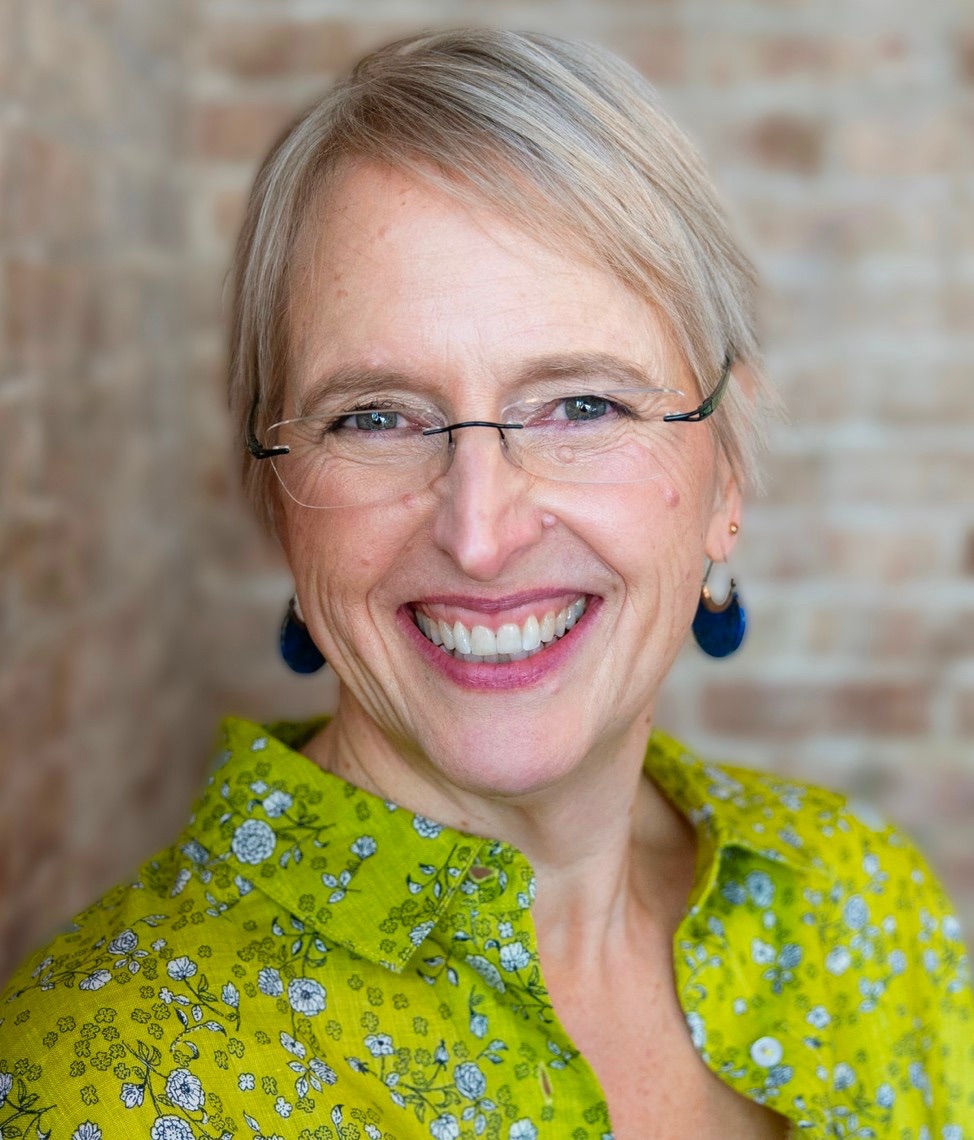
My mission:
I’m Martha Kauppi, and I train therapists all over the world to work with sex issues and non-monogamies, because I believe everyone has the right to culturally-competent, non-marginalizing, and effective therapy.
I know from experience how fabulous and rewarding working with polyamorous clients can be. Seriously, there’s a reason I’ve devoted so much of my career to working with non-monogamous people: they tend to be highly motivated, to value therapy, and to deeply believe in personal growth. How cool is that?
I also know how tough it is to make a good referral.
I can’t possibly see all the clients who come to me, so I know from experience the world needs many more therapists qualified to work with this population.
Would you like to be one of them? If so, this course is your next step.
You’ll get:
- 11 pre-recorded lessons (with written transcripts) to take you from “just starting out” to “confident and competent.” Learn about managing jealousy, negotiating relationship agreements, coming-out issues, parenting while polyamorous, and much more
- A slate of essential therapeutic interventions to grow your clients’ relational capacity. These are the exact tools I use, and I’ll show you how to apply them to all the most common CNM challenges. You’ll learn to use Initiator/Inquirer process to build developmental capacity, apply ego states to working through dilemmas, and get creative with effective chairwork techniques for internal impasses.
- 15 AASECT CEUs* upon successful completion of a learning assessment
- Lifetime access to the full course – complete it at your own pace, never worry about losing access
- The opportunity to join Consensual Non-Monogamy Level 2, a deep dive consulting group that offers ongoing support for all your polyamory cases. This group is exclusively available to graduates of Level 1.
Bonus! Relationship skills handout set ($35 value).
You’ll get the full set of exercises and worksheets from my book, Polyamory: A Clinical Toolkit for Therapists (And Their Clients), in easy-to-download pdf format. I created these handouts based on the exact conversations I have in session. With 25 handouts, totaling 87 pages, this set contains targeted interventions for:
- guiding your clients in a reflective process to discover what relationship style truly suits them
- healing the damage from broken agreements
- preparing for the earth-shaking force that is New Relationship Energy, and preventing it from doing damage to long-standing relationships
- managing difficult emotions (like jealousy)
- supporting your clients in challenging conversations about fidelity, relationship agreements, differences of opinion about polyamory, etc.
Download, print, and share with your clients—no extra work required!
Even more exciting things coming after Level 1...
I’ve got your back, and I won’t let you down.
After you finish Level 1, you are qualified to join CNM Level 2. Level 2 offers in-depth group consultation on your toughest cases involving consensual non-monogamies. It’s a warm, supportive live consultation community, and a soft landing place for the personal vulnerability that comes up when expanding scope. We work together to tough clinical presentations and help you get traction with your cases. I’ll help you apply and expand on material from Level 1, as well as work with anything that comes up in your clinical practice relating to relational work around consensual non-monogamies.
Frequently Asked Questions
Q: I have never worked with a polyamorous client before. Will this class be over my head?
Q: I’ve worked with lots of polyamorous clients. Will this course offer anything new?
Q: Can I get CEUs?
Q: Is this course pre-recorded or live?
Q: Can I get advice from Martha on my cases?
Q: Do you have any resources available for students who can't afford the full price?
What People Are Saying About My Work
Martha gave me concrete skills and approaches that I have been able to immediately and consistently use in my practice, for which I will always be grateful. Her course provides a sorely needed overview not just of the range and variety of CNM, but, most importantly, how a therapist can address the major stumbling blocks which can occur in consensual non-monogamies. I cannot recommend this course highly enough.
Nanaho Sawano, LCSW—New York and New Jersey


Words cannot express the impact Martha has had on me, not only as a mental health professional, but as a human being. She is, hands down, one of the most influential people in my life; she is a model of human kindness and professional integrity. I've learned greatly about human sexuality and healthy relationships through her razor-sharp intuition and clinical and teaching skills. It is a mighty combination!
Vanessa Harvell, LMFT—Los Angeles, California
I find my connection to this group to be invaluable and crucial to the ongoing success of my work with clients. The support is grounding and helps me to keep striving to be the best I can be at working with such difficult issues. I am especially grateful for Martha’s leadership and expertise, as well as her warm and very real approach to the material.
Scott Ferguson, LCSW—New York
I have gained so much more than I ever imagined through Martha. Learning from her, and having access to the amazing wealth of resources that were offered up, has changed how I work with just about everyone! I witness my clients gaining both more ease to explore and more confidence with interventions. My couples have all indicated that the work has deepened in ways they did not think possible before. It has been such a joy to witness their growth. Martha, you are changing so many things for so many people with your wise, compassionate, and generous teaching.
Kathy L. Heuser, Psy.D., LPCC.—Burnsville, Minnesota
Martha is a consummate professional and dynamic teacher and speaker, with an amazing breadth and depth of knowledge about work with sexuality and couples. I am so thrilled she’s offering a workshop for therapists about gaining competency with non-monogamy and poly relationships, because this is such a growing need, and it’s so critical that we therapists respond to it from a place of information, awareness, and understanding. Martha’s work is really one of a kind, and I am so excited to continue to learn from her.
Katherine Waddell, MS, LMFT—Northampton, Massachusetts

What Martha teaches about poly is such important information for all therapists to learn. It is clear that she stands out as a specialist in this area of work. Our profession needs her expertise at a time when there are few trainings to address this issue.
Lori Weisman, MA, LMHC—Bellevue, Washington
Martha has an incredible talent to teach complicated material in a digestible way. Every time I have heard Martha present, I have implemented what I have learned in my sessions right away.
Kelly Scharver, Couples Counselor—Virginia


Martha is so generous and welcoming with her information and abundant resources, experience, online seminar leadership, and knowledge.
Dian Rains Allen, Ph.D., MFT, LPCC—Vallejo, California
Participating in this course has been so helpful in many ways. I feel validated in what I already do well in my work, and it has helped me see where my growth edges are, especially around helping clients make lasting agreements. I found Martha's approach of looking at couples work through the lens of differentiation and relational systems to be very helpful.
Lisa Wolf, PsyD, LP. CST—Ann Arbor, Michigan

1. Rubin, J. D., Moors, A. C., Matsick, J. L., Ziegler, A., & Conley, T. D. (2014). On the margins: Considering diversity among consensually non-monogamous relationships. [Special Issue on Polyamory]. Journal für Psychologie, 22(1), 19-37.
2. Haupert, M. L., Gesselman, A. N., Moors, A. C., Fisher, H. E., & Garcia, J. R. (2017). Prevalence of experiences with consensual nonmonogamous relationships: Findings from two national samples of single Americans. Journal of sex & marital therapy, 43(5), 424-440.
3. Fairbrother, N., Hart, T. A., & Fairbrother, M. (2019). Open relationship prevalence, characteristics, and correlates in a nationally representative sample of Canadian adults. The Journal of Sex Research.
4. OPEN (Organization for Polyamory and Ethical Non-Monogamy). https://www.open-love.org/blog/2025-community-survey-report
*This program meets the requirements of the American Association of Sexuality Educators, Counselors and Therapists (AASECT) and is approved for 15 CE credits. These CE credits may be applied toward AASECT certification and renewal of certification.
